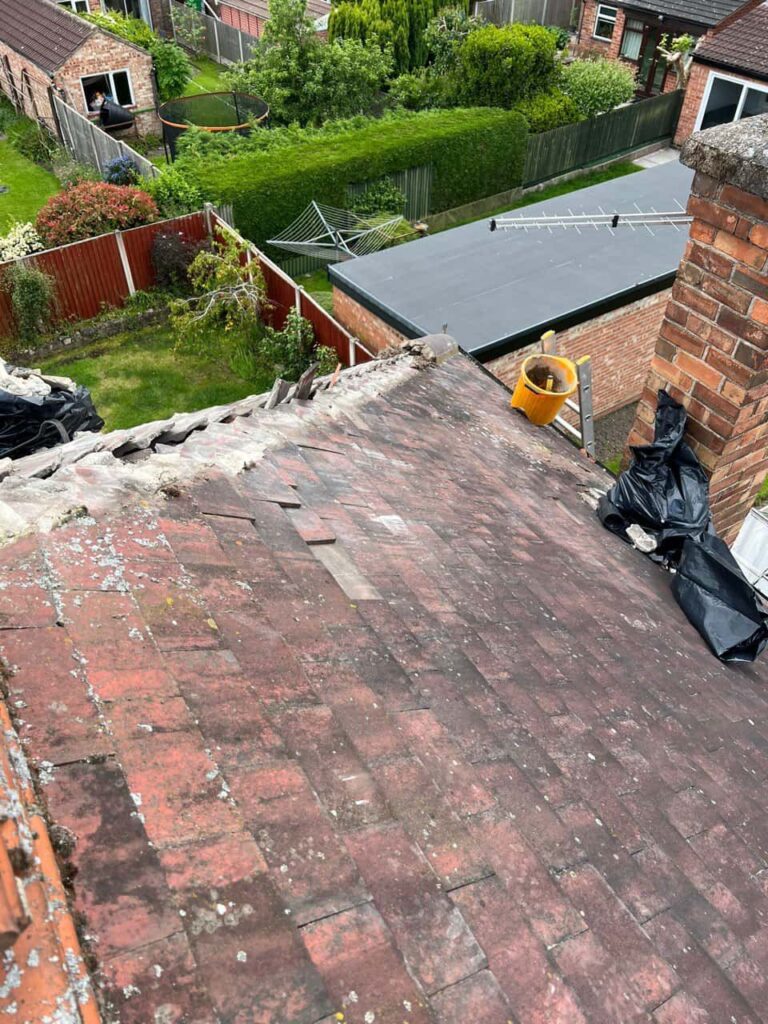
A roof may appear to be in good condition during dry weather, only for signs of a leak to become noticeable after prolonged or heavy rainfall. Water stains on ceilings, damp patches in loft spaces and dripping around windows or chimney areas can all indicate that rainwater is finding its way beneath the roof covering.
Heavy rain does not necessarily create a roofing problem from scratch. In many cases, it exposes existing weaknesses that have gone unnoticed, such as damaged tiles, worn flashing or blocked drainage systems. Understanding why leaks develop can help homeowners in Sidcup, Greater London, recognise the warning signs and arrange suitable repairs before further damage occurs.
How Heavy Rain Exposes Existing Roof Damage
During lighter rainfall, a roof may be able to shed water effectively despite having minor defects. However, heavier rain places greater demands on the roof covering, joints and drainage components.
Water can enter through small gaps around damaged materials or areas where seals have deteriorated. Strong winds accompanying heavy rainfall can also drive water beneath loose tiles or into vulnerable sections that would not normally be exposed.
Once moisture passes through the outer roofing materials, it can travel along timbers or other internal surfaces before becoming visible inside the property. This means the location of a ceiling stain does not always identify the exact point where the leak started.
Damaged or Slipped Roof Tiles
Cracked, broken or displaced roof tiles are a common reason for water entering a property. Tiles form an important protective layer, and even a relatively small gap can allow rainwater to reach the underlying roofing structure.
Damage may develop gradually through ageing, weather exposure or previous movement. A tile that has slipped slightly might not cause an obvious problem in dry conditions, but heavy rainfall can reveal the weakness.
Professional roof repairs can involve identifying affected tiles and replacing or repositioning them where appropriate. It is also important to check the surrounding area to establish whether other sections have become loose or damaged.
Worn or Damaged Roof Flashing
Flashing provides a watertight connection where the roof meets features such as chimneys, walls and roof extensions. These junctions are particularly vulnerable because they involve changes in roof direction and different building materials.
Over time, flashing can become loose, cracked or deteriorated. If the seals around these areas fail, rainwater may penetrate the roof even when the surrounding tiles remain in good condition.
Leaks around chimneys and roof junctions can be difficult to identify from inside the property. A professional inspection helps locate the affected section and determine whether the flashing needs repair or replacement.
Blocked Gutters and Roof Drainage Problems
Gutters and downpipes are designed to carry rainwater away from the roof and building. When they become blocked with leaves, moss or other debris, water may overflow or collect where it should normally drain away.
During heavy rainfall, an obstructed gutter can quickly become overwhelmed. Water may spill over the edges, run down external walls or enter vulnerable areas around the roofline.
Keeping gutters clear and checking that downpipes are working correctly helps reduce the risk of water-related damage. If leaks appear near the eaves or upper sections of external walls after rainfall, the drainage system may be worth inspecting alongside the roof itself.
Ageing Roof Components and Deteriorating Seals
Roofing materials and fittings gradually deteriorate through exposure to changing temperatures, wind and rainfall. Mortar around ridge tiles, seals around roof penetrations and other protective components can weaken over time.
Small cracks or gaps may remain unnoticed until heavy rain allows water to pass through them. In some cases, repeated exposure can gradually worsen the defect, making leaks more frequent or severe.
A roofing inspection can help identify ageing components and establish whether localised repairs are sufficient or whether a wider section needs attention.
Why Prompt Roof Leak Repairs Matter
Even a small roof leak can cause problems if it continues unchecked. Moisture entering the roof space may affect insulation, timber structures, ceilings and internal finishes. Persistent dampness can also contribute to mould growth and unpleasant indoor conditions.
Homeowners should look out for water stains, peeling paint, damp smells and visible dripping after rainfall. If a leak is active, avoid accessing the roof yourself, as wet surfaces can be particularly hazardous. Arrange a professional assessment to establish the source and suitable repair.
Sidcup Roofing Repairs can investigate common causes of roof leaks and carry out appropriate repairs to help restore the roof’s protective function.
Conclusion
Roof leaks often become noticeable after heavy rain because existing weaknesses are exposed to greater volumes of water and more challenging weather conditions. Damaged tiles, worn flashing, blocked gutters and deteriorating roof components can all contribute to water entering a property.
For homeowners in Sidcup, Greater London, addressing these problems promptly can help prevent further deterioration and protect the building from avoidable moisture damage. If you have noticed signs of a leak following recent rainfall, contact Sidcup Roofing Repairs to arrange a professional inspection and discuss the repairs needed to keep your roof in good condition.
Call us on: 0208 059 8598
Click here to find out more about Sidcup Roofing Repairs
Click here to complete our contact form and see how we can help with your roofing repairs.