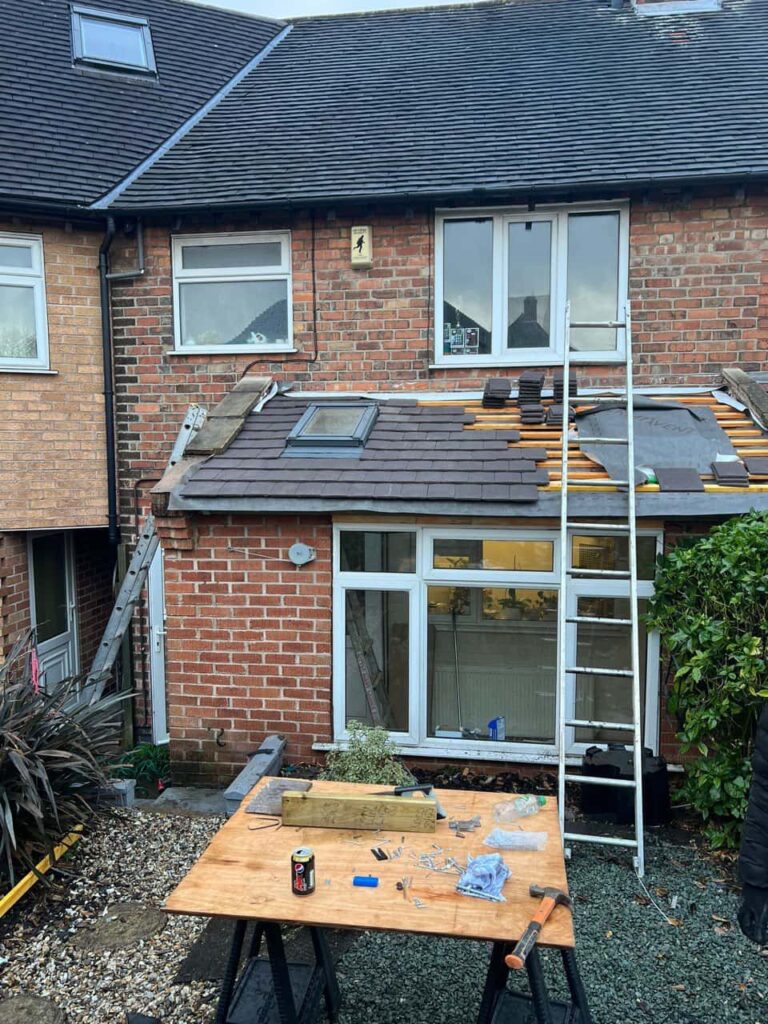
Slipped roof tiles are a relatively common roofing problem, particularly as a roof becomes older. One displaced tile may initially appear to be a minor defect, but it can leave part of the roofing system more exposed to wind and rain. More importantly, recurring slipped tiles can sometimes indicate that deterioration extends beyond the individual tile that has moved.
For homeowners in Sidcup, Greater London, understanding why tiles start slipping can help identify whether a straightforward roof repair is required or whether an ageing roof needs a more comprehensive inspection.
At Sidcup Roofing Repairs, we assess the cause of slipped tiles rather than simply focusing on the most obvious visible defect. This allows the appropriate repair to address the underlying problem wherever possible.
What Actually Keeps a Roof Tile in Position?
Roof tiles form part of a complete roofing system rather than simply resting independently on the roof.
Depending on the roof design and tile type, their stability relies on factors including battens, fixings, neighbouring tiles and correct installation. These elements work together to create a secure and weather-resistant covering.
As the roof ages, individual parts of this system can gradually deteriorate. A tile that remained secure for many years may eventually become vulnerable if the fixing, supporting material or tile itself is no longer in suitable condition.
This is one reason slipped tiles can become increasingly common on older roofs.
1. Fixings Can Deteriorate Over Time
Roof tile fixings are important because they help keep the covering securely positioned.
Years of exposure and general ageing can gradually affect these components. Once a fixing becomes less dependable, the associated tile may have greater potential to move, particularly during difficult weather conditions.
If one fixing has deteriorated because of age, it is also sensible to consider the condition of those nearby.
A professional inspection can determine whether the problem is isolated or whether similar deterioration is developing across a wider section of the roof.
2. Roofing Battens Can Become Less Reliable
Battens provide essential support for many tiled roofing systems.
Because they sit beneath the visible roof covering, homeowners cannot usually assess their condition safely from ground level. Problems may therefore remain unnoticed until tiles begin moving or other defects develop.
If a slipped tile is associated with deterioration beneath the covering, simply putting the tile back into position without addressing the underlying issue may not provide a dependable repair.
This highlights the importance of establishing why a tile slipped in the first place.
3. Older Tiles May Become More Vulnerable
Roof tiles spend their service life exposed to changing weather.
Over many years, individual tiles can become weathered, cracked or otherwise deteriorated. A weakened tile may no longer interact with its fixing or surrounding tiles as effectively as it once did.
Damage can also develop around the sections used to secure or position the tile.
If the tile itself has deteriorated, it may require replacement rather than simply being repositioned.
4. Repeated Weather Exposure Has a Cumulative Effect
A roof may withstand countless periods of wind and rain without any obvious immediate damage.
However, weather exposure is cumulative.
An older roof has experienced many more seasons than a recently installed one. Components that were once secure may gradually become more vulnerable, meaning weather conditions that previously caused no problem can eventually contribute to tile movement.
This does not mean every slipped tile is caused directly by a single storm. In some cases, difficult weather simply exposes an existing weakness within an ageing roofing system.
5. Movement in One Tile Can Affect Surrounding Areas
Tiled roofs rely on correctly positioned materials working together.
When one tile slips, the surrounding arrangement can be affected. Sections that were previously covered may become more exposed, while neighbouring tiles should be checked to ensure they remain properly positioned and secure.
This is particularly important on an older roof.
If several nearby tiles or fixings have experienced similar deterioration, replacing only the most obviously displaced tile may overlook other vulnerable areas.
Why Should a Slipped Tile Be Repaired Promptly?
A slipped tile can create an opening within the external roof covering.
The extent of the immediate risk depends on the roof construction and location of the defect, but leaving the problem unattended can expose underlying materials to increased weather.
A displaced tile may also continue moving.
Prompt professional attention allows the roof to be inspected while the defect is relatively contained and provides an opportunity to check whether surrounding components require attention.
Does One Slipped Tile Mean the Whole Roof Is Failing?
No.
One slipped tile does not automatically mean an older roof needs replacing.
The problem may be highly localised. For example, one damaged tile or individual fixing might be responsible while the surrounding roof remains in good condition.
In that situation, targeted professional repair may be entirely appropriate.
The concern increases when tiles repeatedly slip from different areas or when inspection reveals broader deterioration affecting the roofing system.
Recurring Slipped Tiles Tell You More Than a Single Defect
The pattern of tile movement is important.
If one tile slips after years without roofing problems, an isolated defect may be responsible. If another tile slips shortly afterwards, followed by several more elsewhere, it becomes increasingly important to assess the roof as a whole.
Recurring problems can suggest that:
- Multiple fixings are deteriorating
- Several tiles have become weathered
- Supporting materials require attention
- Previous repairs have addressed symptoms rather than the wider cause
- General roof deterioration is becoming more widespread
This does not automatically mean complete replacement is necessary, but it does justify a broader professional assessment.
What Other Signs Should Homeowners Look For?
Slipped tiles may appear alongside other signs of an ageing roof.
From a safe position at ground level, homeowners might notice:
Missing Tiles
A tile may move far enough to leave the roof entirely.
Cracked or Broken Tiles
Physical deterioration can affect the effectiveness of the covering.
Uneven Sections
Tiles that no longer sit consistently may indicate movement requiring investigation.
Debris Around the Property
Fragments of roofing material can sometimes indicate damage above.
Internal Water Marks
Staining or dampness following rainfall may indicate that the roof’s weather protection has been compromised.
These signs are useful reasons to arrange an inspection rather than attempting to diagnose the roof from ground level.
Why Repositioning the Tile May Not Be Enough
The visible problem is a tile that has moved, but the most important question is why it moved.
Simply returning a tile to approximately its original position does not necessarily resolve deterioration affecting the fixing or supporting components.
An effective repair should consider:
- The condition of the displaced tile
- How it was secured
- The condition of nearby tiles
- Relevant battens and fixings
- Signs of deterioration around the affected area
- Evidence of water penetration
- Whether similar problems exist elsewhere
Identifying the cause makes the repair more meaningful than simply treating the appearance of the roof.
When Is a Localised Roof Repair Appropriate?
Professional repair can be an excellent solution where tile movement is limited to a particular area and the wider roof remains serviceable.
Depending on the defect, the work may involve replacing damaged materials, correctly securing tiles and addressing relevant underlying problems.
The important factor is that the surrounding roof should be in suitable condition.
There is little reason to recommend extensive roofing work where a clearly isolated problem can be repaired effectively.
When Should the Complete Roof Be Assessed?
A wider assessment becomes particularly useful when slipped tiles form part of a recurring pattern.
Consider arranging a complete roof inspection if:
- Tiles repeatedly move from different sections
- Several tiles are visibly damaged
- Previous repairs have become frequent
- Leaks have developed alongside tile movement
- Large sections appear weathered
- Ridge or hip areas also show deterioration
- The roof has several different problems occurring together
At this stage, understanding the overall condition is more useful than concentrating solely on whichever tile has most recently slipped.
Why DIY Tile Repairs Can Be Problematic
A displaced tile can look straightforward from below, but working at roof level presents obvious risks and the cause may not be visible without appropriate inspection.
Attempting to push or reposition a tile without understanding how it should be secured can also leave the underlying defect unresolved.
Professional roofers can inspect the relevant area, determine why movement occurred and check whether neighbouring components require attention.
For homeowners, arranging professional assessment is a far more appropriate approach than attempting to access and repair an ageing roof personally.
Can Regular Roof Maintenance Help?
Roof maintenance cannot prevent every defect, but identifying deterioration early can reduce the likelihood of small weaknesses remaining unnoticed.
For an older roof, periodic professional attention can be particularly valuable because several components may be progressing through similar stages of weathering.
Addressing an individual damaged tile or deteriorating detail while the surrounding roof remains sound can help maintain the roofing system without unnecessary wider work.
The important principle is to respond to the condition of the roof rather than waiting until multiple visible problems have developed.
Professional Slipped Tile Repairs in Sidcup
At Sidcup Roofing Repairs, we provide professional roofing services for properties in Sidcup, Greater London, including the assessment and repair of slipped, missing and damaged roof tiles.
Our approach is based on identifying the reason for the problem.
Where a tile has slipped because of an isolated defect, a targeted repair may be appropriate. Where repeated tile movement indicates broader deterioration, assessing the surrounding roofing system can help establish what work is genuinely required.
This provides homeowners with a more useful solution than simply replacing the visible tile without considering why it became displaced.
Conclusion
Older roofs can become more prone to slipped tiles because the materials responsible for keeping the covering secure have experienced years of weathering and general deterioration. Tiles themselves may weaken, fixings can become less dependable and underlying components may no longer provide the same level of support they once did.
One slipped tile does not automatically mean that a roof requires replacement. However, repeated movement across different sections can indicate a wider problem that deserves professional investigation.
If you have noticed slipped, loose or missing roof tiles at your property in Sidcup, Greater London, contact Sidcup Roofing Repairs. We can assess the affected area, identify the likely cause and carry out appropriate professional roof repairs to help keep your roofing system secure and weather-resistant.
Call us on: 0208 059 8598
Click here to find out more about Sidcup Roofing Repairs
Click here to complete our contact form and see how we can help with your roofing repairs.